You walk into a room and immediately feel anxious. Or you step into another and instantly relax. You might blame the color, the clutter, or the lighting. But what if the culprit is something more fundamental: the empty space itself? The way your furniture is arranged, the pathways you’re forced to take, the sightlines you’re given—this isn’t just interior design. It’s applied psychology.
We spend our lives inside rectangles, yet we rarely consider how the architecture of those rectangles governs our emotions, our conversations, and our energy. A poorly arranged room isn’t just an aesthetic fail; it’s a cognitive tax. It can make you feel trapped, isolated, or perpetually on-edge without you knowing why. Conversely, a thoughtfully arranged space can foster connection, focus, and profound calm. Your floor plan is writing the script for your daily life. Let’s learn to read it—and rewrite it.
Part 1: The Foundational Forces: Prospect, Refuge, and Entrapment
Environmental psychologists identify key spatial needs hardwired into our ancient brains.
- Prospect: The ability to see across a space, to survey your environment. It makes us feel in control, aware, and connected to the larger whole. A room with a clear view to a window or an open doorway offers prospect.
- Refuge: The feeling of being sheltered, protected, and in a safe, enclosed space. A cozy nook, a high-backed chair in a corner, a canopy bed. It makes us feel secure and private.
- The Ideal: The perfect space offers both—a refuge with a prospect. A window seat (refuge) that looks out over a garden (prospect). A cozy reading chair in a corner (refuge) that faces the living room (prospect).
- Entrapment: The negative opposite of refuge. This is when you are stuck in a space with poor escape routes and no prospect. A chair pushed into a dead-end corner with its back to the door. A desk facing a solid wall with no view. This triggers low-grade anxiety (our primal fear of being ambushed).
Your first task in any room is to diagnose: Does it offer balanced prospect and refuge, or does it create points of entrapment?
Part 2: The Flow & Friction: How Movement Shapes Mindset
The paths we take through a room are behavioral scripts.
- The “Social Spine”: The main pathway through a room (e.g., from the entry to the kitchen). This should be clear, intuitive, and generous (at least 3 feet wide). Obstructions here create daily friction and a sense of chaos.
- Conversation Pits vs. Lecture Halls: How is your furniture arranged?
- Confrontational Layout: Chairs and sofas directly facing each other from far away can feel formal and intense, like a negotiation.
- Collaborative Layout: Seating arranged at slightly angled, closer proximities (forming an L-shape or a U-shape) fosters easier, more natural conversation. The goal is to create a circle of intimacy.
- The “Doorway Effect”: Our brains use doorways as event boundaries to compartmentalize memories. A clear visual transition (an area rug, a change in lighting) can help signal a shift in room purpose (from “living” to “dining”), reducing cognitive load.
Part 3: The Room-by-Room Psychological Prescription
The Living Room: The Hub of Connection or Isolation?
- Goal: Foster relaxed social interaction and individual calm.
- Prescription:
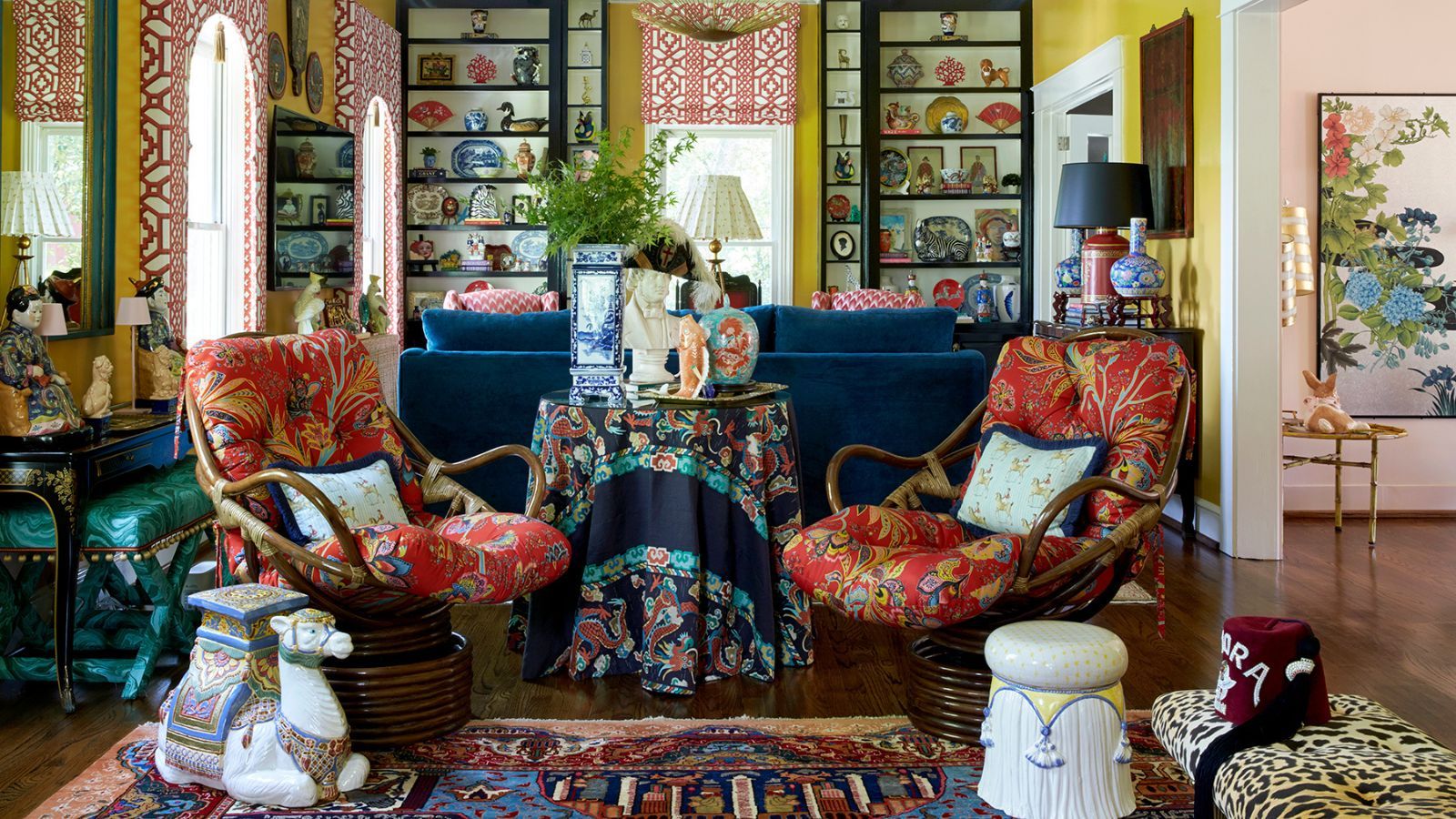
- Anchor with a Rug: Define the primary conversation area with a large area rug. Everyone’s front feet should be on it.
- Create the “Huddle”: Arrange seating so people are no more than 8-10 feet apart, angled toward each other. A sofa and two chairs in an L-shape is classic for a reason.
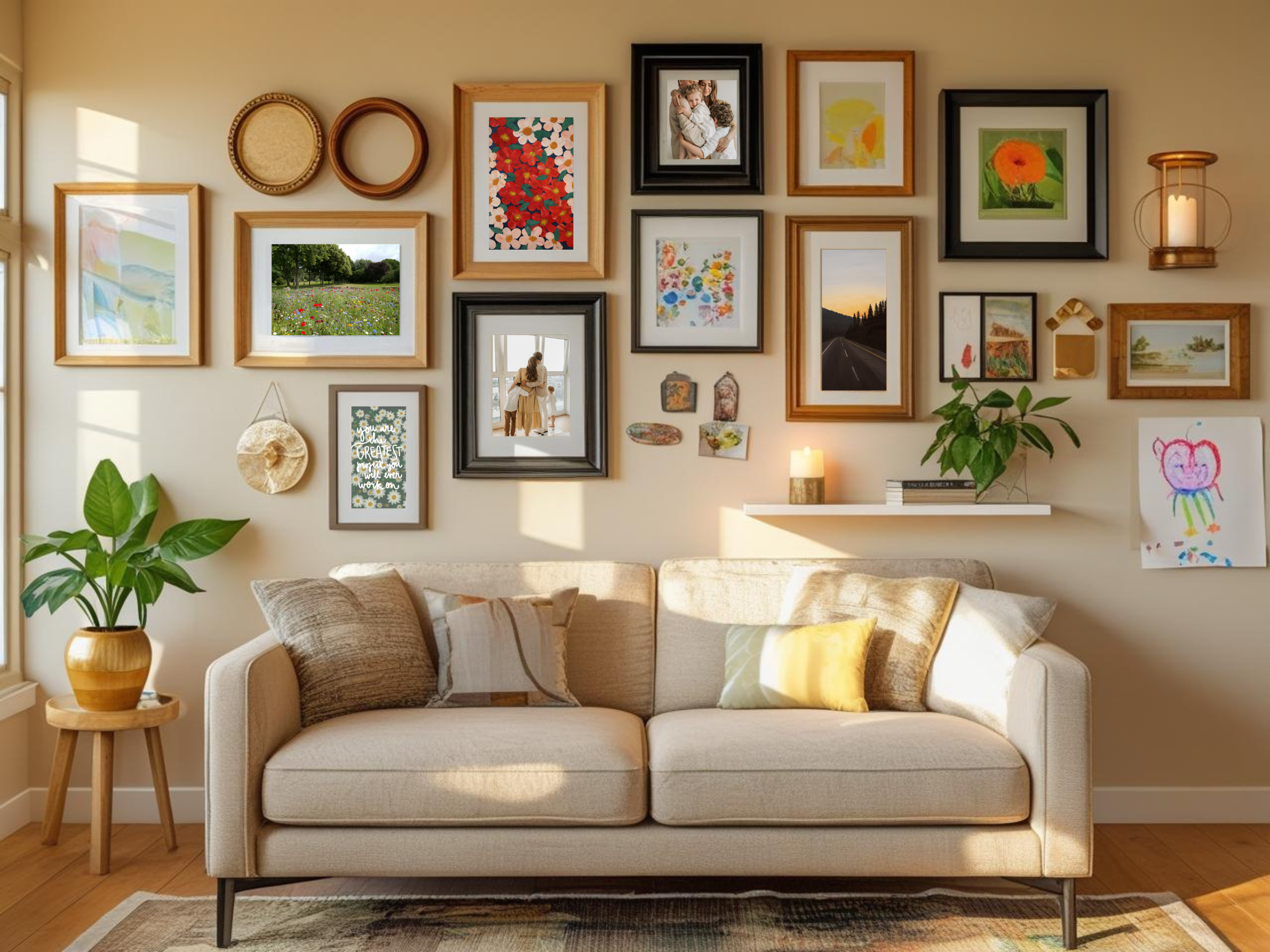
- Eliminate “Interview” Settings: Don’t push all furniture against the walls. Float the sofa away from the wall to create a walkway behind it. This makes the space feel more intimate and grounded.
- Protect Refuge Spots: Ensure at least one seating option offers a sense of refuge (a chair with a high back, slightly angled toward a corner) for those who want to observe or need a moment of quiet within the social space.
The Home Office / Study: The Focus Factory or Distraction Zone?
- Goal: Promote deep focus and minimize cognitive fatigue.
- Prescription:
- Command the Door: Position your desk so you can see the entrance to the room without being directly in line with it (the “command position”). This satisfies prospect and reduces the subconscious anxiety of someone approaching unseen.
- Face Inspiration, Not a Wall: If you must face a wall, place something meaningful and visually engaging on it (a vision board, inspiring art, a shelf with plants). A blank wall is mental prison.
- Define “Work” and “Not Work”: Use a room divider, a different rug, or even a change in lighting to separate your desk area from a reading or brainstorming chair. This creates psychological compartments for different types of thinking.
The Bedroom: The Sanctuary or Storage Dump?
- Goal: Unconditional rest and intimacy.
- Prescription:
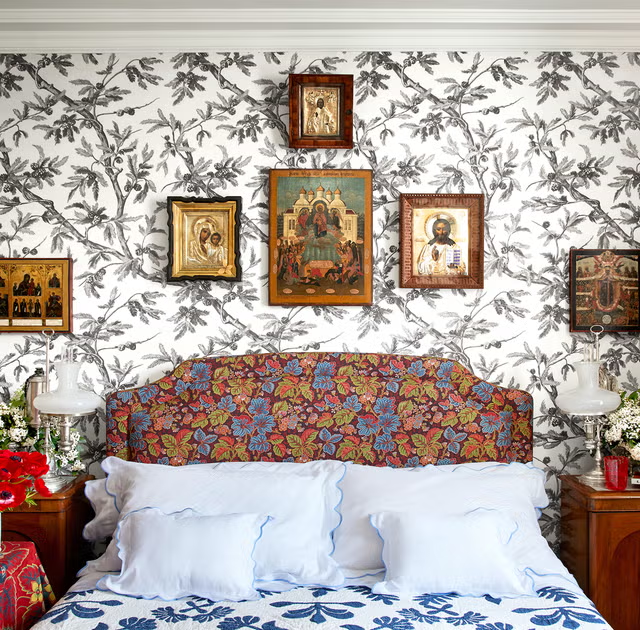
- The Bed as a Sanctuary Island: Center the bed on the most solid wall (not under a window if it causes drafts/anxiety). Leave space to walk on both sides. This makes it a protected, special object.
- Clear the “Line of Fire”: Never place the bed so your feet point directly out the door (the “coffin position,” a classic feng shui no-no that subconsciously triggers unease).
- Minimize Functional Clutter: Remove visible reminders of work (laundry piles, exercise equipment, office supplies). The bedroom should have one purpose. This clarity is calming.
The Dining Room: The Nourishment Hall or Pass-Through?
- Goal: Encourage lingering conversation and mindful eating.
- Prescription:
- Create an “Enclosed” Feel: Use a rug under the table, a pendant light lowered over it, or a buffet against one wall to define the space as a distinct, purposeful zone, even in an open floor plan.
- Facilitate Eye Contact: A round or oval table eliminates hierarchy and makes conversation easier. With a rectangular table, ensure the ends are accessible and inviting, not stacked with clutter.
Part 4: The Diagnostic Walkthrough: Feeling Your Floor Plan
- Enter as a Stranger: Walk in the main door. What do you see first? A wall? A beautiful vista? A pile of clutter? The “first impression” sets the tone.
- Trace the Path: Walk the natural path you’d take to the kitchen, the couch, the bedroom. Is it smooth or an obstacle course?
- Sit in Every Seat: Literally. Sit where you usually sit, then sit everywhere else. How does the room feel from each vantage point? Do you feel exposed, trapped, or perfectly placed?
- Listen to Your Body: Do your shoulders tense in a certain spot? Do you naturally avoid a particular chair? Your body is picking up on spatial cues your conscious mind ignores. Trust it.
Conclusion: The Architecture of Ease
Spatial psychology teaches us that our environments are not passive containers. They are active participants in our mental and emotional lives. A great room layout doesn’t shout its cleverness; it disappears, allowing you to simply be—to connect, to focus, to rest, without friction.
You don’t need to rebuild your house. You need to rethink the space within it. This weekend, push your sofa off the wall. Pull your desk away from the corner. Create a refuge spot. Feel the energy in the room shift.
When you arrange your furniture, you are not just decorating a room. You are designing an experience. You are writing the silent, spatial rules for how your life unfolds within those four walls. Make them rules that serve your peace, your joy, and your connections.
FAQs: Your Spatial Psychology Questions
Q1: I have a small, awkward space. How can I apply these principles without a perfect rectangle?
A: Small spaces benefit most from these rules. The key is zoning.
- Use a rug and a specific light source to define the “living zone” in one corner.
- Use a room divider (a tall bookshelf, a curtain) to create visual separation and a sense of refuge, even if physical separation is impossible.
- Float furniture (especially the sofa) away from the walls. This counterintuitively makes a small room feel larger by creating layered pathways, rather than pushing everything to the perimeter which screams “I’m tiny!”
Q2: My partner and I use the living room differently (one for TV, one for reading). How do we layout for both?
A: Create “Dual Zones” within the same room.
- The primary seating (sofa) faces the TV for the watcher.
- In another part of the room, create a distinct “reading nook”: a dedicated armchair, a specific floor lamp, and a small side table, angled slightly away from the TV. This uses furniture placement and lighting to signal a different purpose, satisfying both needs for prospect (being in the social room) and refuge (having a dedicated, focused spot).
Q3: Does feng shui work? Is this the same thing?
A: Spatial psychology is the Western, research-based cousin of the ancient intuitive art of feng shui. They overlap significantly in their core observations (the command position, the importance of clear pathways, the avoidance of the “coffin position”). You don’t have to believe in chi to benefit from the practical, human-centric wisdom both systems share about how space affects us. Think of spatial psychology as feng shui’s evidence-based translation.
Q4: What if my architectural features (columns, weird nooks, radiators) force bad layouts?
A: Work with, not against, the awkwardness.
- A column can become a room divider, defining two zones.
- A deep nook is a gift for a built-in desk or a cozy reading bench—it’s natural refuge.
- A radiator under a window? Don’t block it with a sofa. Place a sleek console table in front of it, creating a visual barrier and a useful surface, while allowing heat to circulate. The goal is to integrate the feature into your plan, not to fight it.
Q5: What’s the single most impactful change I can make?
A: Pull your major furniture pieces away from the walls. Especially your sofa. Floating it even 6-12 inches into the room creates a sense of depth, intimacy, and definition. It breaks the “dance hall” feeling of everything lined up at the edges and instantly makes a seating area feel more intentional, cozy, and conversation-friendly. Try it for a week. You’ll be amazed at the psychological shift.