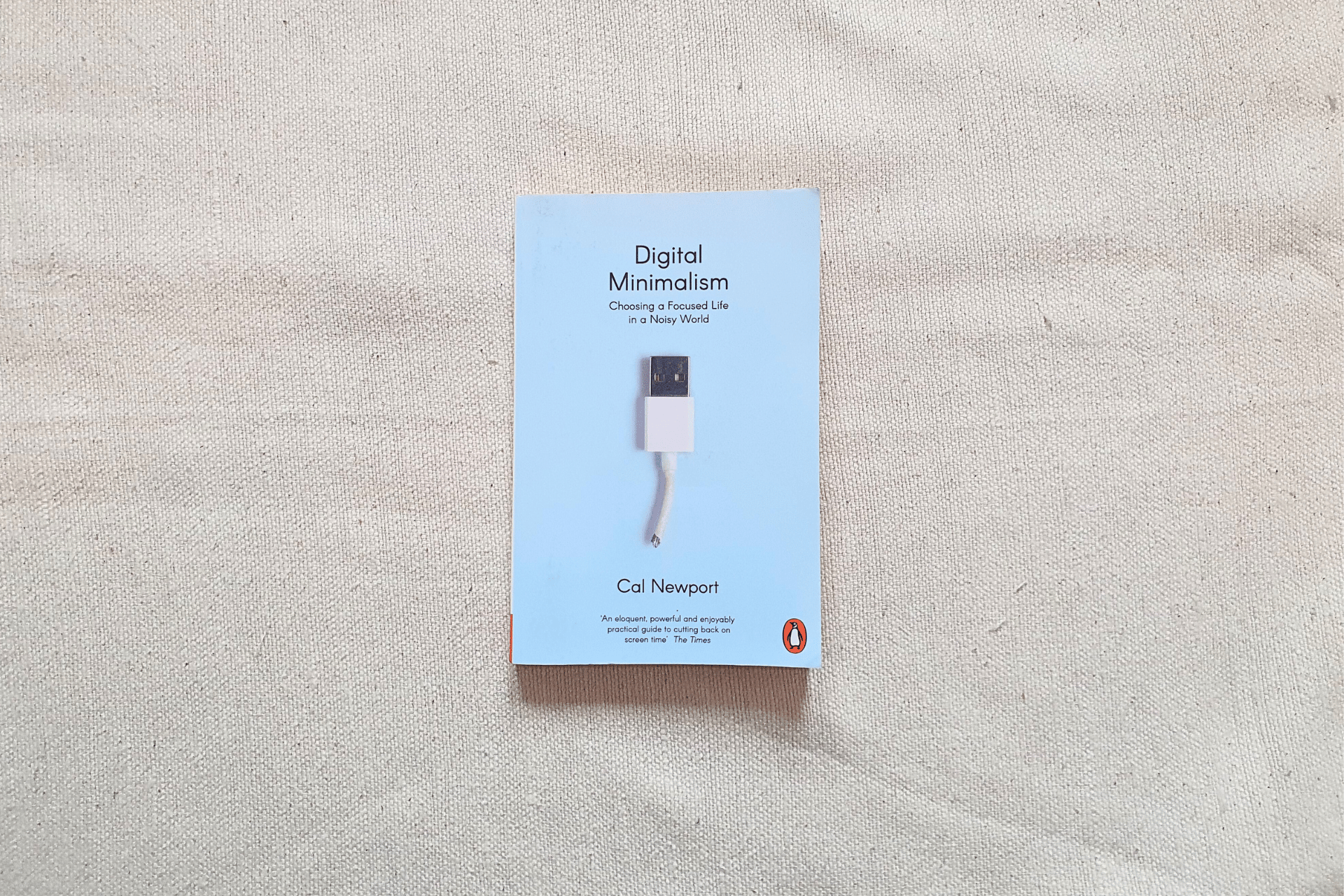
We need to have an honest talk about your phone. It’s not a tool anymore. It’s a slot machine, a surveillance device, and a non-stop performance hall that you carry in your pocket. You know this. You’ve felt the phantom buzz, the compulsive reach, the hour lost to a TikTok black hole, the bleary-eyed scroll before sleep. You’ve tried “digital detoxes” and app timers, only to find yourself right back in the grip.
The first wave of digital minimalism was about decluttering: deleting apps, turning off notifications, trying to use our devices less. But it was like putting a bandage on a bullet wound. The problem isn’t just the quantity of our digital use; it’s the quality of it. We’re not just distracted; we’re digitally dispersed, our attention fractured into a million monetizable pieces.
Welcome to Digital Minimalism 2.0. This isn’t about using your phone less. It’s about reclaiming your intention. It’s a proactive philosophy for building a digital life that actively serves your real life, rather than parasitically draining it. It’s time to move from being a passive user to becoming an intentional owner of your most precious resource: your attention.
Part 1: The Diagnosis: We’re Not Addicted to Our Phones, We’re Addicted to Tension Release
Scrolling isn’t a pleasure-seeking behavior; it’s primarily a tension-avoidance behavior.
Think about the trigger. A moment of boredom. A difficult task. An awkward silence. A pang of anxiety. In that nanosecond of discomfort, your brain, trained by a trillion-dollar industry, knows exactly where to go for quick, predictable relief: the glowing rectangle. The infinite scroll promises to resolve the tension of “What should I do? What should I think? How should I feel?”
Every pull-to-refresh is a mini-tension (Will there be something new?) and release (There is!). It’s a neurological pacifier. Digital Minimalism 2.0 asks: What tensions are you trying to avoid? And what healthier, more fulfilling ways could you resolve them?
Part 2: The 2.0 Philosophy: Intentionality Over Austerity
The old model was subtractive: “Remove the bad stuff.” The 2.0 model is additive and intentional: “Define what technology is for in your life, and ruthlessly optimize for that.”
- The Core Question: For any technology (app, device, platform), you must be able to articulate: “What is the specific, high-value human need this serves for me?”
- Low-Value Answer: “To pass the time.” / “To see what’s happening.”
- High-Value Answer: “To coordinate weekly family video calls.” / “To follow three experts in my field for professional development.” / “To share photos of my child with my private family group.”
If you can’t define a clear, positive, and specific intent, that technology has failed the test. It’s not a tool; it’s a time-suck.
Part 3: The 2.0 Toolkit: Advanced Tactics for the Attention War
Move beyond simple app deletions. Deploy these strategic defenses.
1. The “Analog First” Protocol
For any intent, ask: “Could this be done better, or more satisfyingly, in the analog world?”
- Intent: Learn something new. Digital: Watch a YouTube explainer. Analog: Read a physical book from the library.
- Intent: Connect with a friend. Digital: Send a meme on Instagram. Analog: Write a postcard or schedule a phone call.
- Intent: Relax. Digital: Scroll Pinterest. Analog: Knit, sketch, or simply stare out the window.
You’re not rejecting digital; you’re choosing the best medium for the human need.
2. The “Single-Purpose Device” Resurrection
Embrace technological “downgrades” for massive mental upgrades.
- Get a real alarm clock. Banishes the phone from the bedroom.
- Use a dedicated digital camera for important events. It separates the act of documenting from the temptation to broadcast and compare.
- Buy a simple MP3 player for music/podcasts on walks. It allows for auditory immersion without the siren call of notifications.
3. The “Attention Architecture” Overhaul
Redesign your devices to make distraction difficult and intention easy.
- Nuclear Phone Layout: On your home screen, keep only apps for Navigation, Communication, and Capture (Maps, Phone, Messages, Camera, Notes). Every other app goes into a folder named “…” on the last page. Increase friction.
- Grayscale Mode: Go to Settings > Accessibility > Display & Text Size > Color Filters. Turn on Grayscale. Watch how instantly dopamine-draining apps lose their visual candy appeal. Your phone becomes a tool.
- Website Blockers with Nuclear Codes: Use Freedom or Cold Turkey not just to block sites, but to set a schedule with a “Nuclear Code”—a long, random password you write down and put in another room. If you need to override the block for legitimate work, you must physically get up and break the spell of the screen.
4. The “Digital Sabbath” With a Twist
Instead of a full day offline (which can feel punishing), practice a “Platform Sabbath.” Each weekend, pick one major platform (Instagram, Twitter, YouTube) and take the entire day off from it. Rotate each week. This doesn’t cut you off from the world, but it breaks the compulsive habit loops of specific apps and reveals how little you actually miss them.
Part 4: Filling the Void: Cultivating “High-Quality Leisure”
The biggest failure of old digital minimalism was creating a vacuum. When you put the phone down, what do you pick up? If the answer is “boredom and anxiety,” you’ll go right back.
You must proactively cultivate high-quality leisure: activities that are demanding, satisfying, and connect you to the physical world or your deeper self.
- Learn a manual skill: Woodworking, baking, gardening, playing an instrument.
- Engage in “Deep Play”: Reading a challenging novel, working on a complex puzzle, building a model.
- Prioritize “Conversation over Consumption”: Host a dinner party, play a board game, go for a walk with a friend and leave your phones behind.
You are not depriving yourself of screens. You are nourishing yourself with richer experiences.
Conclusion: From Default Settings to Default Living
Digital Minimalism 2.0 is not a one-time purge. It’s an ongoing practice of conscious curation. It’s the daily choice to design your digital environment so that it supports your humanity, rather than exploits your psychology.
Your attention is not just another resource. It is the canvas of your life. Where your attention goes, your life goes. Minutes spent mindlessly scrolling through the curated highlights of strangers’ lives are minutes not spent building your own relationships, skills, and memories.
Start tonight. Put your phone in another room. Sit with the boredom for five minutes. See what thought or creative impulse arises. That small moment of authentic human experience, untouched by algorithms, is your birthright. Reclaim it, one intentional choice at a time.
FAQs: Your Digital Minimalism 2.0 Questions
Q1: My job requires me to be online and responsive. How can I apply this?
A: This calls for “Hyper-Intentional Compartmentalization.”
- Use Separate Devices/Profiles: A work laptop for work apps/email. A personal device for everything else. Never the twain shall meet.
- The “Commander’s Intent” for Work Tech: Define the core purpose of each tool. “Slack is for urgent team coordination, not all-day chat.” “Email is for processed information, not a to-do list.” Communicate these intentions to your team.
- Schedule “Deep Work Blocks” with Aggressive Defenses: Use website blockers and turn off notifications during 2-3 hour blocks for focused work. Your out-of-office reply can say: “I am in a focused work session and will respond after [time].”
Q2: I’m afraid of missing out on important news or my friends’ lives.
A: Conduct a 48-hour experiment. Disconnect fully. Then ask: What “important” news did you miss that impacted your decisions or well-being? Usually, it’s none. The “news” that reaches you is anxiety-inducing noise. For friends, choose connection over surveillance. You’ll miss the superficial updates, but you can call or meet them for a real conversation, where you’ll learn more about their actual life than you ever would from their feed. Quality over quantity.
Q3: This sounds lonely. My online communities are important to me.
A: 2.0 is about curation, not eradication. If a Discord server for your niche hobby brings you genuine joy and connection, that’s a “high-value use” with specific intent. The key is to access it intentionally. Schedule time for it. Don’t leave it open as a perpetual tab. Go in, engage meaningfully, then leave. Protect it from becoming a source of endless, distracting chatter.
Q4: I’ve tried before and always relapse. How do I make it stick?
A: Relapse happens when we rely on willpower alone. You must change the environment.
- Increase Friction: Delete apps. Use blockers with nuclear codes. Make distraction physically difficult.
- Replace the Habit Loop: The itch to scroll is a signal. Have a pre-planned analog substitute: do 10 push-ups, read one page of a physical book, write one sentence in a journal.
- Forgive and Reset: If you relapse, don’t use it as an excuse to quit. Acknowledge it, understand the trigger, and restart your boundaries immediately. It’s a practice, not a purity test.
Q5: What’s the single most effective 2.0 change I can make today?
A: Turn your phone to grayscale and move every non-essential app off your home screen. Do these two things right now. Grayscale removes the predatory color psychology. The empty home screen creates a moment of pause where you must consciously ask, “What do I actually intend to do?” instead of mindlessly tapping. This one-two punch breaks the autopilot and hands control back to your prefrontal cortex.