Here’s a strange truth: you and I are living in different worlds. Oh, we share the same physical planet—the same cities, the same weather patterns, the same global events. But the reality we experience through our screens, the information we absorb, the opinions we’re exposed to, and even the products we’re tempted to buy are increasingly personalized. Unique. Tailored just for us.
The architect of this personal reality isn’t human. It’s a set of complex, invisible equations called algorithms. These are the silent, omnipresent engines that power our digital lives, deciding what we see, when we see it, and in what order. They determine what’s “important,” what’s “relevant,” and what’s “for you.”
Most of us interact with them dozens of times a day without a second thought. We scroll, we click, we like, and we watch, all the while feeding data into these engines, which in turn refine the world they show us. But have you ever stopped to ask: Who programmed these engines? And to what destination are they driving us?
This isn’t just a tech question. It’s a question about psychology, society, and power. Let’s pop the hood and look at the invisible engine curating your life.
What Exactly Is an Algorithm? (It’s Simpler Than You Think)
The word sounds intimidating, like something only a Silicon Valley genius in a hoodie could understand. But at its core, an algorithm is simply a set of step-by-step instructions to solve a problem or complete a task.
Think of it as a recipe. A chocolate chip cookie recipe is an algorithm: *Step 1: Cream butter and sugar. Step 2: Add eggs and vanilla. Step 3: Mix in dry ingredients. Step 4: Fold in chocolate chips. Step 5: Bake at 375°F for 9-11 minutes.*
Follow the steps, get a predictable result (hopefully, cookies).
A digital algorithm is the same, but for data. The “problem” it solves is: “Given this specific user and millions of pieces of content, what should I show them next to achieve my goal?” The “goal” is the critical part, and it’s almost never “to inform and empower this user.” It’s usually something like “maximize engagement time” or “increase the probability of a click or purchase.”
Meet the Curators: The Major Algorithms in Your Life
You have relationships with several key algorithmic systems. It’s time you learned their names and motives.
The Social Puppeteer: The Facebook & Instagram Feed Algorithm
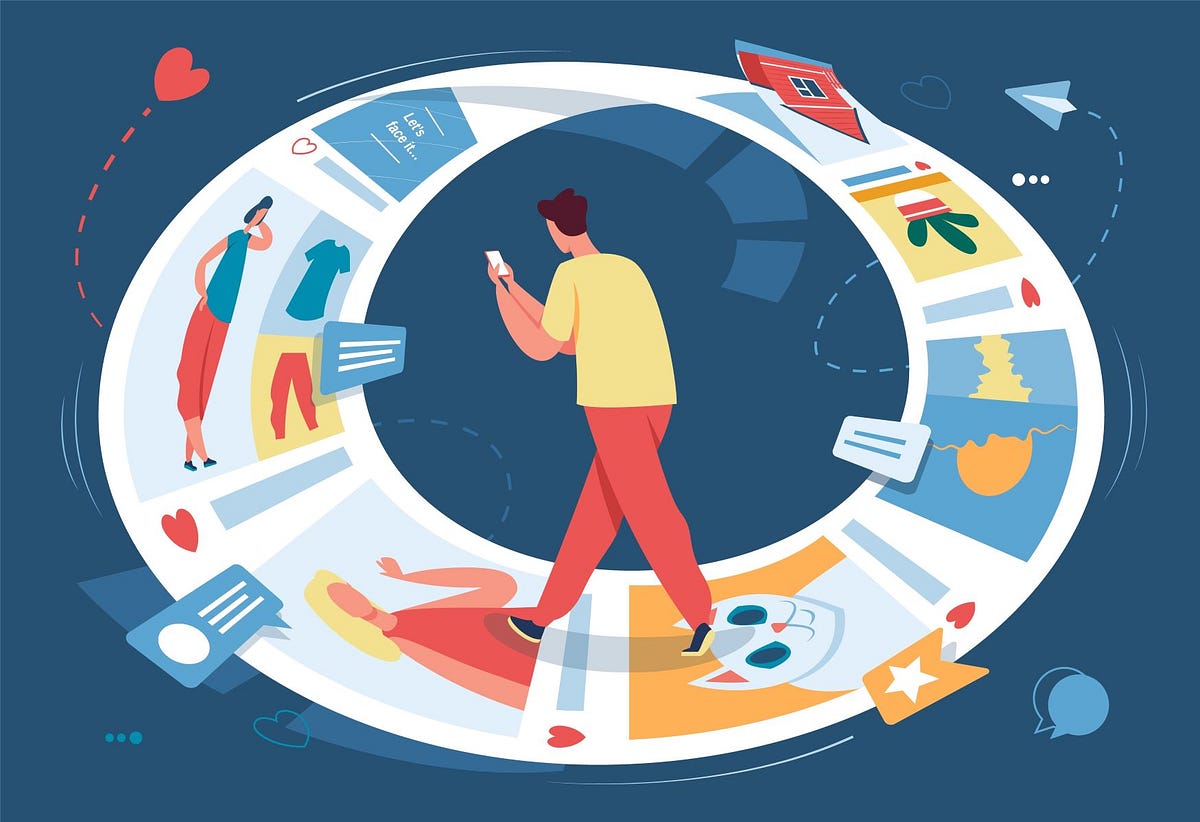
This is perhaps the most influential algorithm in modern social life. It doesn’t show you a chronological list of your friends’ posts. Instead, it ranks every single post competing for your attention based on thousands of signals.
Its Main Goals: Keep you scrolling, reacting, and coming back.
How It Works: It prioritizes content that sparks high-engagement (comments, shares, angry reacts) and from people/interests you interact with most. It’s famously testing what it can get away with—if you always stop to watch cooking videos, it will slowly fill your feed with them, even if that means you see less from your actual family. It creates engagement loops, where provocative or emotionally charged content is boosted because it gets a reaction, further training the algorithm to show you more of it.
The Rabbit Hole Digger: The YouTube Recommendation Engine
This algorithm is a master of narrative. Its genius (and danger) lies in its ability to construct interest pathways.
Its Main Goal: Maximize Watch Time (the holy grail of YouTube success).
How It Works: It maps connections between videos. Watch one video on “beginner guitar tips.” It will recommend a lesson on G major. From there, it might suggest a video on “the best guitars under $500.” Then, a gear review channel. Then, a documentary on the history of rock. Before you know it, three hours have passed, and you’re watching a conspiracy theory about left-handed guitarists. It didn’t just recommend *a* video; it recommended a journey, optimized to keep you watching the next thing, and the next.
The Store That Knows You: Amazon & E-commerce Algorithms
These algorithms turn browsing into a psychological profile and then a personalized sales funnel.
Its Main Goals: Predict what you’ll buy and increase your average order value.
How They Work: They use collaborative filtering (“People who bought X also bought Y”) and item-to-item filtering (“This product is similar to that product you looked at”). Ever noticed how eerily accurate “Recommended for You” can be? It’s also why you get emails about the exact item you left in your cart—a tactic called retargeting designed to overcome hesitation.
The News Editor-Bot: Google Search & News Aggregators
This is the algorithm that shapes our understanding of the world. It decides what information is “authoritative” and worthy of being seen.
Its Main Goal: Provide the most relevant, high-quality results for a query (and keep you using Google).
How It Works: It uses your search history, location, and a complex web of backlinks (who links to whom) to rank pages. The problem? It creates a filter bubble. Two people searching for “climate change” may get radically different results: one served scientific consensus from NASA, the other directed to partisan blogs, based on their past behavior. The algorithm isn’t judging truth; it’s judging relevance to you, which can reinforce existing beliefs.
The Psychological Levers: How Algorithms Hack Your Brain
Algorithms are effective because they are built on a deep, often exploitative, understanding of human psychology.
- The Variable Reward Schedule: Like a slot machine, algorithms provide unpredictable rewards. You don’t know if the next scroll will bring a hilarious meme, a friend’s engagement post, or shocking news. This “maybe next time” dopamine trigger is highly addictive.
- The Fear-of-Missing-Out (FOMO) Engine: By showing you what’s “trending” or what your friends are interacting with, algorithms tap into our primal need for social belonging and awareness. It creates anxiety that drives compulsive checking.
- The Confirmation Bias Amplifier: Algorithms learn that you engage more with content that aligns with your existing worldview. So, they show you more of it. This creates a dangerous feedback loop, reinforcing beliefs and shielding you from challenging perspectives. It makes us more certain, but less informed.
The Real-World Consequences: When Curation Becomes Control
This isn’t just about spending too much time on your phone. The invisible curation of our reality has profound societal impacts.
- Political Polarization: By funneling people into separate informational realities, algorithms can deepen societal divisions. Opposing groups aren’t just disagreeing on solutions; they’re operating with entirely different sets of “facts.”
- The Erosion of Shared Reality: When we all consume different news, witness different trends, and even experience different cultural moments, it becomes harder to have a common conversation as a society. What is “obvious” to one person is invisible to another.
- Mental Health Toll: Constant comparison to algorithmically-curated highlight reels (the perfect vacations, bodies, careers, families) is linked to increased anxiety, depression, and loneliness, particularly among young people.
Taking Back the Wheel: How to See and Influence the Engine
You can’t escape algorithms, but you can stop being a passive passenger. You can become a conscious driver.
1. Become Algorithmically Literate
The first step is awareness. Now that you know these engines exist and have goals, you can observe their effects. Notice when you’re being served content that makes you angry or envious. Ask, “Why is this being shown to me right now?” Just labeling it changes your relationship to it.
2. Curate Your Inputs to Curate Your Outputs
Remember, you train the algorithm. Be deliberate with your engagement.
- Mute, Unfollow, and Tell Platforms “Not Interested”: Actively prune your feeds. This sends a powerful signal.
- Use Your Clicks Wisely: Intentionally engage with content you want to see more of—balanced news, educational creators, positive communities.
- Break Your Own Pattern: Regularly search for topics outside your usual interests. Watch a video from a contrary perspective (without engaging angrily). This introduces noise into your profile and broadens your view.
3. Escape the Bubble with Analog and Direct Actions
- Seek Out Primary Sources: Read full news articles, not just headlines in a feed. Go directly to the websites of publications you trust.
- Talk to Real Humans: Have conversations with people who think differently than you, in person. It’s the best antidote to digital echo chambers.
- Embrace Serendipity: Let yourself get bored. Read a physical book. Go for a walk without a podcast. The algorithm hates serendipity; your creativity needs it.
Conclusion: From Passive Consumer to Conscious User
Algorithms are not evil sentient beings. They are tools, designed by companies with specific business objectives—usually to capture and sell attention. The problem arises when we forget they are there, when we mistake the curated world in our palm for the whole, messy, complex, and beautiful world outside.
Understanding the invisible engine is the first step toward digital sovereignty. It’s the realization that your feed is not reality; it is a version of reality, crafted for a purpose. Once you see the strings, you can decide which ones to pull, which ones to cut, and when to simply put the puppet down and walk away.
Your attention is the most valuable commodity in the 21st century. You get to decide who you pay it to. Choose consciously.
FAQs About Algorithms
1. Can I actually “reset” or “trick” an algorithm?
You can’t fully reset it, but you can retrain it significantly. This takes consistent, deliberate action over 1-2 weeks. Mass-unfollow accounts, use incognito mode for neutral searches, and aggressively use “Not Interested” and “Don’t Recommend Channel” features. It’s less about tricking it and more about giving it new, better data about who you want to be.
2. Are algorithms making me more extreme in my views?
They are likely reinforcing your existing views and potentially moving you toward more extreme content within that niche. This is because extreme content often generates high engagement (clicks, comments, shares), which signals the algorithm to promote it. If you have a mild interest in a political topic, the algorithmic pathway can lead you to increasingly partisan content to keep you engaged.
3. What’s the difference between an algorithm and artificial intelligence (AI)?
An algorithm is a fixed set of rules. AI (specifically machine learning) is a system that can learn and change its own rules based on data. Most modern “algorithms” (like your social feed) are actually powered by AI. They start with a base rule set but then continuously evolve their sorting logic based on how billions of people interact. So, the feed algorithm you used today is slightly different from the one last month—it has learned.
4. Why does it feel like my phone is “listening” to me?
It almost certainly isn’t listening in the secret microphone sense (that would be a massive legal and battery-life nightmare). The more likely explanation is remarkable predictive profiling. The algorithm knows your demographics, your location, your friend group, your past searches, and what people like you are talking about. When you have a conversation about, say, needing a new car, and then see an ad for one, it’s less about eavesdropping and more about the algorithm already knowing you’re at a life stage where a car purchase is statistically probable.
5. Is there any “good” side to these personalized algorithms?
Absolutely. When designed with ethical intent, personalization is powerful. It can help you discover amazing niche creators you’d never find otherwise, surface crucial health information relevant to you, connect you with supportive communities (like for rare hobbies or medical conditions), and filter out the overwhelming noise of the internet to deliver genuinely useful tools, entertainment, and learning resources. The tool itself is neutral; its impact depends on the goals of its designers and the awareness of its users.